
By Dr. Abiola Bashorun
Coordinator, ZL Global Alliance Climate-Smart Programme
For many residents of Birnin Kebbi, the severe sandstorm that swept through the city on June 10, 2026, was a frightening experience. Within minutes, thick clouds of dust turned daytime into near darkness, reducing visibility, disrupting daily activities, and leaving communities struggling to navigate the sudden environmental upheaval.
While the storm eventually gave way to rainfall, its significance extends far beyond a temporary weather disturbance. The event serves as a powerful warning of the growing climate and environmental pressures confronting northern Nigeria and highlights the urgent need for stronger adaptation and resilience measures.
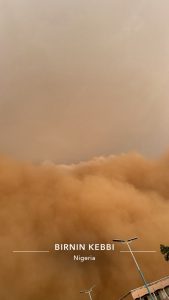
Kebbi State, situated in northwestern Nigeria within the Sudan-Sahel Savannah ecological zone, is known for its hot semi-arid climate. The state experiences some of the highest temperatures in the country, with average annual temperatures ranging between 28°C and 32°C. During the peak hot season in March, April, and May, daytime temperatures frequently soar between 40°C and 45°C, making April one of the hottest months of the year.
The region’s climate is characterized by a long dry season from October to May and a single rainy season that runs from May to October. During the Harmattan period, dry and dusty winds from the Sahara Desert dominate the atmosphere, bringing haze, low humidity, and poor visibility. Annual rainfall in Kebbi typically ranges between 600 mm and 800 mm, considerably lower than levels recorded in southern Nigeria.
Given these conditions, the sandstorm that struck Birnin Kebbi shortly before rainfall was not entirely unexpected. The state’s proximity to the Sahel and the southern fringes of the Sahara Desert makes it particularly vulnerable to dust storms, especially during seasonal transitions when strong winds lift loose soil and sand into the atmosphere.
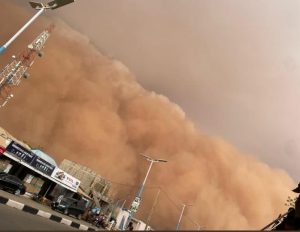
However, the intensity of the June 10 storm raises broader concerns. Video footage captured the speed with which the sky darkened as dust engulfed the city, creating hazardous conditions and exposing the vulnerability of communities to extreme weather events. The incident also reflected the growing environmental stress linked to desertification, deforestation, land degradation, unsustainable land-use practices, and climate variability.
Although sandstorms are natural features of the Sahelian environment, increasing reports of extreme heat, prolonged dry spells, dust storms, and erratic rainfall patterns across northern Nigeria suggest that climate change and ecosystem degradation are amplifying existing risks.
For Kebbi State, one of Nigeria’s leading agricultural hubs, the implications are significant. Climate variability threatens food production, water resources, public health, infrastructure, and livelihoods. Without proactive intervention, these challenges could have serious economic and social consequences for millions of people.
One important lesson from the Birnin Kebbi sandstorm is the need for climate-resilient infrastructure. The widespread darkness witnessed during the storm demonstrated how vulnerable communities can become when conventional power systems are disrupted. Expanding decentralized solar-powered electricity generation and storage systems would greatly improve resilience during extreme weather events.
Solar-powered street lights, hospitals, police stations, emergency response centres, schools, and water facilities can continue operating during environmental emergencies, ensuring public safety and uninterrupted delivery of essential services.
Equally important is the urgent expansion of afforestation and reforestation programmes across Kebbi State and the wider northern region. Trees help stabilize soils, reduce wind erosion, combat desertification, moderate local temperatures, and improve overall ecosystem health. Establishing shelterbelts, restoring degraded lands, and protecting existing forests are critical measures for reducing the frequency and severity of dust and sandstorms.
The continued loss of vegetation through deforestation, bush burning, and unsustainable land-use practices leaves communities increasingly exposed to environmental hazards. Strategic tree-planting and landscape restoration initiatives can help mitigate sandstorm impacts while enhancing agricultural productivity, biodiversity conservation, carbon sequestration, and long-term climate resilience.
The Birnin Kebbi sandstorm should therefore not be viewed as an isolated weather event. Rather, it is a visible manifestation of the mounting climate pressures facing northern Nigeria and a warning signal that demands immediate attention.
Addressing these challenges will require coordinated action by government, the private sector, development partners, civil society organizations, and local communities. Investments in renewable energy, afforestation and reforestation, climate-smart agriculture, sustainable land management, resilient infrastructure, and stronger environmental governance are no longer optional—they are essential.
The storm may have passed, but its message remains unmistakable: the time to build climate resilience is now. Protecting lives, livelihoods, and sustainable development in northern Nigeria depends on the actions taken today.