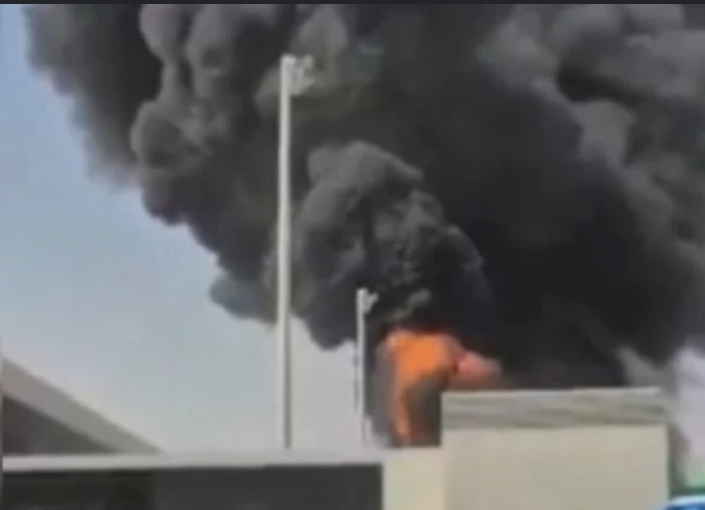
At least 12 people have been killed and 309 injured in an attack on King Khalid International Airport in Riyadh, Saudi Arabia, amid escalating hostilities involving Yemen’s Houthi rebels and growing fears of a wider regional conflict.
The Saudi-led coalition blamed the Iran-backed group for the attack, describing it as a “full-fledged war crime”, while a diplomatic source attributed the strike to a missile.
The attack came amid an escalation in Houthi strikes against Saudi Arabia following the collapse in July of a truce in the long-running conflict between the rebels and Yemen’s internationally recognised government, which is backed by Riyadh.
The renewed violence has raised concerns about a broader regional confrontation, with United States President Donald Trump indicating that Washington could join military action against the Houthis.
A passenger who spoke to AFP described scenes of panic at the airport’s domestic terminal following the strike.
“I was on gate 403,” the witness said. “I saw 401 hit, I saw injured in front of my eyes. Everyone was running.”
According to Saudi Arabia’s civil aviation authority, those killed included four Saudi citizens, two Bangladeshis and one citizen each of the United States, Egypt, Jordan, Syria and Sudan, as well as one Palestinian.
The authority said some of the 309 injured were in serious condition. Airport operations were suspended following the attack as authorities began assessing the damage.
A medical source said health officials had activated an unusual mass call-up of doctors to respond to what was described as a “serious emergency situation”.
Two doctors also told AFP that several pilgrims travelling to Mecca were among those injured.
Riyadh Schools Switch to Remote Learning
Schools across Riyadh switched to remote learning for the second time in a month following the attack.
Parents in the Saudi capital received emails on Sunday, seen by AFP, citing an education ministry directive requiring all schools in Riyadh to conduct lessons remotely for the entire week.
The move came as authorities and security agencies assessed the potential impact of the attack on public safety.
Coalition spokesman Major General Turki al-Malki condemned the incident in a statement posted on X.
“The cowardly terrorist attack by the Terrorist Houthi Militia… which resulted in deaths and injuries among civilian passengers and airport staff, constitutes a full-fledged war crime,” he said.
Earlier, the coalition had announced that it intercepted missiles targeting Saudi Arabia and destroyed launch platforms.
The Houthis claimed a series of attacks targeting the airport on Thursday, which reportedly killed three people and damaged an aircraft. However, the group had not immediately claimed responsibility for the latest strikes reported on Saturday.
The attack was described in the report as the deadliest on Saudi soil since May 2015, when a suicide bombing by the Islamic State militant group killed 21 worshippers at a Shia mosque in the eastern Qatif governorate.
Trump Signals Possible US Involvement
Yemen’s civil war intensified again in July following the collapse of a four-year United Nations-brokered truce, amid a wider Middle East conflict that has disrupted regional security and energy markets.
Saudi Arabia has led an international coalition supporting Yemen’s government militarily since 2015 and is now facing renewed pressure as violence in its neighbouring country escalates.
Asked on Saturday whether he had changed his mind about joining Saudi strikes against the Houthis, Trump said: “We may.”
The US president said he planned to speak with Saudi Crown Prince Mohammed bin Salman, describing the attack as “not acceptable”.
US media outlets have reported that previous Saudi requests for American military assistance against the Houthis had been rejected.
Following the attack, the US, Canadian, German and Spanish embassies in Saudi Arabia warned their citizens to avoid the airport.
A senior Western diplomat told AFP that several embassies were prohibiting their staff from using the airport over the following week.
Pakistan’s Prime Minister Shehbaz Sharif condemned what he called the “heinous attack” and reaffirmed Islamabad’s commitment to Saudi Arabia’s security under their defence pact.
The incident also occurred shortly before Saudi Arabia’s high-profile convention and entertainment season, which begins this month. Riyadh typically hosts a packed calendar of events, including a major investment conference attended by foreign leaders and business executives.
Fighting Intensifies Around Bab al-Mandab Strait
Meanwhile, Saudi-backed Yemeni government forces were advancing against the Houthis in areas around the Bab al-Mandab Strait that the group reportedly captured last month, military sources told AFP.
The Yemeni government announced a counter-offensive last week aimed at retaking all territories held by the Houthis.
The rebels confirmed that government forces had launched attacks in the Bab al-Mandab area but claimed to have repelled the offensive.
The strait is a strategic chokepoint for oil and cargo shipments passing through the Red Sea, making the renewed fighting a significant concern for international shipping and regional trade.
However, claims by the warring parties have been difficult to verify independently amid rapidly changing battlefield conditions and limited access for journalists.
The attack on Riyadh airport, alongside escalating fighting in Yemen, has heightened concerns about a broader regional confrontation, with Saudi Arabia facing renewed security challenges and Washington leaving open the possibility of military involvement.