
Hours of heavy rainfall on Tuesday left many Lagos communities underwater, submerging homes and roads, disrupting movement and triggering power outages after floodwaters damaged critical electricity infrastructure.
Communities including FESTAC, Gbagada, Ikeja, Ajah, Evans, Olushi, Anikantamo and Adeniji Adele were among the worst affected, with residents wading through flooded streets while motorists struggled to navigate submerged roads.
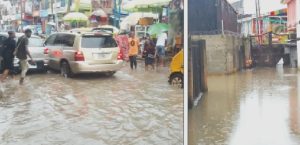
In Ikeja, floodwaters entered several homes and shops, forcing some residents to temporarily relocate over fears that the flooding could worsen.
Residents blamed the situation on blocked drainage channels, poor road design and indiscriminate waste disposal, saying floodwaters often take hours to recede after rainfall.
A resident, Abidemi Raji, alleged that a drainage channel linking his area to a neighbouring street had been blocked following the construction of a hotel, worsening the flooding.
In FESTAC, residents described the flooding as a recurring problem that disrupts daily activities whenever heavy rain falls. Many motorists avoided flooded roads to prevent vehicle damage, while commuters struggled to reach their destinations.
The downpour also knocked out electricity in parts of the state after floodwaters affected facilities at the Oworo 132/33kV Transmission Station.
In a public notice, Ikeja Electric said severe flooding damaged two power transformers and several 33kV feeders, affecting electricity supply to communities including Ladilak, Bariga, Oworo, Pedro, Alapere, Agboyi, Araba and Gbagada.
The distribution company said it was working with the Transmission Company of Nigeria to restore electricity as soon as repairs were completed.
The flooding extended into neighbouring Ogun State, where residents of Gloryland Estate in Ibafo appealed for urgent government intervention, saying the annual floods had damaged homes, disrupted businesses and forced some families to temporarily leave their houses.
Community leader Oladipupo Awoyemi blamed the persistent flooding on blocked drainage channels along the Lagos-Ibadan Expressway, illegal construction and indiscriminate refuse dumping, which have obstructed natural waterways.
Meanwhile, Lagos State Governor Babajide Sanwo-Olu has approved the dredging of 28 additional primary drainage channels to strengthen flood control across the state.
Commissioner for the Environment and Water Resources, Tokunbo Wahab, described Tuesday’s rainfall as an extreme weather event that overwhelmed existing drainage infrastructure, causing temporary flooding in Victoria Island, Lekki, Ikeja, Gbagada, Mushin, Mafoluku and several other communities.
He assured residents that the government was monitoring flood-prone areas and urged the public to stop dumping refuse into drainage channels, avoid illegal reclamation of wetlands and stay away from flooded roads during heavy rainfall.