
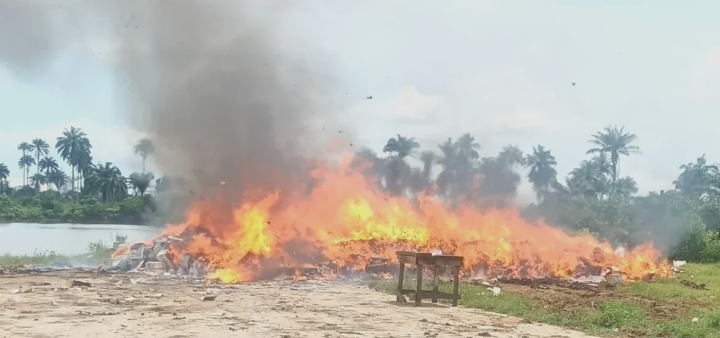
Fake alcoholic drinks, drugs, chemicals, other goods seized in Lagos, Aba, Port Harcourt
The National Agency for Food and Drug Administration and Control (NAFDAC) has seized and destroyed counterfeit and unwholesome products worth more than ₦5.3 billion in one week as it intensifies efforts to protect Nigerians from potentially dangerous goods.
The agency’s Deputy Director of Public Relations, Christiana Obiazikwor, disclosed this in an interview with Saturday PUNCH on Friday, detailing enforcement operations involving suspected counterfeit alcoholic beverages, repackaged products, pharmaceuticals, chemicals, tomato paste and biscuits.
According to her, NAFDAC seized suspected counterfeit alcoholic drinks and illegally brewed or repackaged products worth ₦2 billion at the Lagos International Trade Fair Complex on October 13.
The agency also seized suspected fake drinks and packaging materials valued at more than ₦700 million in Aba, Abia State, while products worth ₦2.6 billion were destroyed in Port Harcourt, Rivers State, on Friday.
Obiazikwor said operatives uncovered more than 20 illegal stores at Zamfara Plaza within the Trade Fair Complex, where they allegedly discovered activities involving the counterfeiting of popular alcoholic beverage brands, the revalidation of expired drinks and the stockpiling of banned imported products.
She added that two suspects were arrested during the operation, while the seized products were evacuated from the premises.
NAFDAC uncovers fake drinks, packaging materials in Aba
In Aba, NAFDAC operatives raided five shops at Old Court Road Market over suspected counterfeit alcoholic beverages and packaging materials valued at more than ₦700 million.
According to Obiazikwor, the seized materials included fake labels, corks, packs and outer packaging bearing the names of established brands.
She said the operatives encountered resistance from traders during the operation, affecting the evacuation of the materials.
The agency added that the shop owners were absent and the premises were placed on hold to prevent interference with items left behind.
In a separate operation on October 15, NAFDAC officials uncovered a suspected alcoholic beverage counterfeiting facility at No. 25 Omenazu Street, Aba.
Obiazikwor said the facility was allegedly used to produce spirits and herbal liqueurs under unhygienic conditions.
She explained that the operator fled when officials arrived following a tip-off, abandoning his vehicle at the premises.
According to her, the vehicle contained labels and products bearing the names Sir Edwards Scotch Whisky and Scottish Hills Whisky, alongside empty bottles in the boot.
A drum containing about 200 litres of liquid and a product branded Café Rum Whisky were also found, she added.
Other items recovered included 200-litre drums containing ethanol, plastic buckets, pieces of tree bark, packaging materials, corks, tanks containing liquid mixtures, dirty sieves, sealing machines, bottles bearing popular brand names and cartons.
Obiazikwor said the materials and facility were valued at more than ₦500 million.
NAFDAC destroys ₦2.6bn goods in Port Harcourt
In a separate exercise in Port Harcourt, NAFDAC destroyed products worth ₦2.6 billion, according to Obiazikwor.
The goods included pharmaceutical products, chemicals, tomato paste, biscuits and other items described by the agency as unwholesome. They had been intercepted and seized by the Nigeria Customs Service at Onne Port between 2025 and 2026.
The Chairman of the Federal Task Force on Counterfeit, Fake Drugs and Unwholesome Processed Foods in Nigeria, Dr Martins Iluyomade, represented NAFDAC’s Director-General, Prof Mojisola Adeyeye, at the destruction exercise on Friday.
Iluyomade, who is also NAFDAC’s Director of Investigation and Enforcement, said the exercise demonstrated cooperation between the agency and the Nigeria Customs Service in disposing of seized goods.
He said the process began in 2025 and that both agencies had signed memoranda of understanding to facilitate the destruction of the products.
“This gesture corroborates the existing good relationship we have between NAFDAC and the Nigeria Customs Service. We have MoUs signed, but we have people who have to work behind the scenes to make sure that the MoUs work,” he said.
He added that cooperation between officers of the two agencies had helped translate the agreements into action.
Iluyomade described the exercise as the first phase, noting that additional seized goods were expected to be brought from the port for destruction.
He urged the Nigeria Customs Service to facilitate the release of the remaining containers for disposal and called for stronger cooperation among government agencies involved in combating counterfeit products and illicit activities.
He also warned against inter-agency rivalry, stressing the importance of coordinated enforcement.
Representing the Enforcement Unit of the Nigeria Customs Service, Area II Command, Superintendent of Customs Elizabeth Abosede commended NAFDAC for the exercise.
The South-South Zonal Director of NAFDAC, Chukwuma Oligbu, represented by his deputy, Rita Chukwuma, said the destruction was part of the agency’s regulatory responsibilities and aimed at removing fake and substandard products from communities.
Public health risks
A public health expert, Olusoji Aramide, warned that adulterated alcoholic beverages could expose consumers to harmful substances.
He added that counterfeit or substandard medicines might contain incorrect ingredients, insufficient quantities of active ingredients or contaminants, potentially undermining treatment and endangering patients.
Aramide explained that counterfeit packaging could also make products appear genuine while concealing their actual origins, expiry dates or contents.
NAFDAC has urged Nigerians to remain vigilant when purchasing products and to report suspected illegal manufacturing, repackaging and sales activities to the agency.
The enforcement operations underscore the public health concerns associated with counterfeit beverages, medicines and other consumer goods, as authorities continue efforts to prevent potentially dangerous products from reaching the market.