
As the global transition to clean energy accelerates, the Coordinator of the Climate-Smart Sustainability Programme (Nigeria & USA), Dr. Abiola Bashorun, has called for the adoption of agrovoltaics as a climate-smart solution to boost food security, expand clean energy access and drive sustainable economic growth in Nigeria and other developing countries.
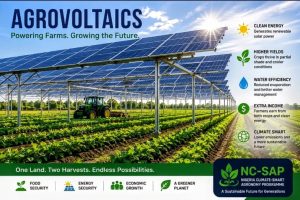
Dr. Bashorun described agrovoltaics as the next generation of sustainable development, integrating agriculture with solar photovoltaic (PV) power generation to transform conventional solar farms into engines of economic growth, climate resilience and agricultural productivity.
According to her, agrovoltaics enables the simultaneous use of land for farming and renewable energy production. Crops can be cultivated beneath or between elevated solar panels, while livestock grazing, beekeeping and other agricultural activities continue without interruption.
She explained that beyond generating clean electricity, the system delivers multiple environmental and economic benefits. Solar panels provide partial shade that reduces water evaporation, improves soil moisture retention and protects certain crops from excessive heat, helping farmers maintain productivity despite changing climate conditions.
Dr. Bashorun noted that the approach also diversifies farmers’ income by combining agricultural production with renewable energy generation, making rural livelihoods more resilient to climate and market uncertainties.
She said agrovoltaics bridges the gap between agricultural land use and renewable power generation by maximising land productivity while creating new economic opportunities for farmers and rural communities.
According to her, the integrated model supports agro-industrialisation by providing reliable electricity for irrigation, cold storage, food processing, packaging and value addition. This, she said, strengthens rural economies, boosts agricultural productivity, enhances food security, creates employment opportunities and accelerates sustainable economic development.
For developing countries such as Nigeria, Dr. Bashorun described agrovoltaics as a practical solution for addressing multiple national priorities, including energy access, food security, climate adaptation, youth employment, rural industrialisation and economic diversification. She added that the model also supports national climate commitments, attracts private sector investment and strengthens local agricultural value chains.
She stressed that as governments, investors and development partners continue to seek scalable climate-smart solutions, agrovoltaics stands out as one of the most innovative approaches available, demonstrating that solar farms can become centres of agricultural excellence, rural enterprise, environmental stewardship and inclusive economic transformation.
“In an era where every hectare of land must deliver greater value, agrovoltaics is the extra that makes solar farms extraordinary. It is where clean energy meets food production, climate resilience meets economic opportunity, and sustainable development becomes a reality,” Dr. Bashorun said.