
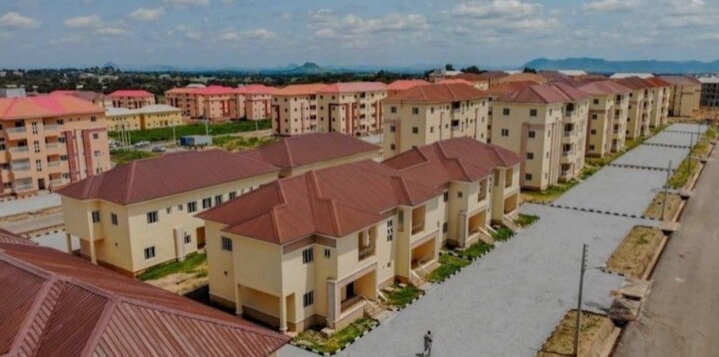
The Federal Government and state governments are exploring reforms to mortgage financing and land administration to make housing more affordable and accessible to Nigerians, with proposals for single-digit interest rates and repayment periods of up to 35 years.
The proposals were presented by the Sokoto State Commissioner for Lands, Housing, Survey and Town Planning, Alhaji Nasiru Dantsoho, at the opening of the 15th National Council on Lands, Housing and Urban Development meeting in Sokoto on Monday.
Dantsoho called for a reduction in mortgage interest rates from the current double-digit levels to single digits, alongside an extension of repayment periods from 25 to 35 years, to ease the financial burden on prospective homeowners.
He also advocated expanding access to mortgage financing beyond formal public and private sector employees to include traders, farmers and other Nigerians working in the informal sector, many of whom remain excluded from conventional housing finance schemes.
The commissioner urged financial institutions, particularly the Federal Mortgage Bank of Nigeria (FMBN), to provide adequate funding and introduce flexible repayment arrangements that reflect the earnings of different groups. He said farmers and other seasonal earners should be allowed to repay loans in line with their income cycles, including after harvests.
Dantsoho also stressed the need for states to digitise land administration systems to improve transparency, efficiency and access to land, describing inclusive housing delivery as a key objective of the meeting.
He commended Sokoto State Governor Ahmed Aliyu for prioritising urban development, noting that the state had undergone significant changes in recent years.
The commissioner expressed concern over Nigeria’s housing challenges, citing a housing deficit of more than 14.5 million units and an estimated 50.6 million people living in unsafe housing conditions.
In his remarks, Alhaji Mukhtar Umar, Director of Planning, Research and Statistics at the Federal Ministry of Housing and Urban Development, described the meeting as an important platform for examining challenges in the housing sector and developing practical solutions to improve housing delivery nationwide.
He explained that the council’s deliberations would begin with technical reviews of memoranda by directors and other officials working in thematic groups. The groups would assess existing challenges, examine proposed interventions and develop actionable recommendations.
According to Umar, permanent secretaries from the states, the Federal Capital Territory and the Federal Ministry would subsequently review and harmonise the recommendations before commissioners and the ministers of Housing and Urban Development consider them for policy direction.
He added that the council would review the implementation of resolutions reached at its 14th meeting in Ilorin, Kwara State, identify outstanding issues and strengthen accountability.
The meeting would also determine the date and venue of the 16th council session before adopting its final communique.
The Permanent Secretary of the Sokoto State Ministry of Lands, Housing, Survey and Town Planning, Alhaji Moyi Tambuwal, said land remained fundamental to livelihoods, economic activities, social development and the preservation of resources for future generations.
He disclosed that the Sokoto State Government was pursuing land administration reforms, including the digitisation of land records, efforts to reduce the time required to obtain Certificates of Occupancy and the allocation of land for mass housing development under the Federal Government’s Renewed Hope Housing Programme.
Tambuwal said the initiatives reflected the state’s commitment to building a more efficient, transparent and responsive land administration system.
However, he noted that addressing Nigeria’s housing challenges would require sustained reforms, stronger institutional collaboration and innovative approaches to housing finance.
“Delivery of adequate and affordable housing requires more than physical construction, but an efficient land administration framework, accessible housing finance, effective institutions, appropriate policies and strong coordination among federal, state governments and the private sector,” he said.
He added that access to affordable mortgage finance was critical to expanding homeownership among civil servants, traders, farmers, young professionals and Nigeria’s growing youth population.
Tambuwal urged participants to move beyond identifying challenges and develop practical solutions, close institutional gaps, harmonise policies and strengthen collaboration with organisations such as the FMBN and Family Homes Funds.
He said the success of the council should be measured by the extent to which its resolutions improved access to land, expanded housing finance and accelerated the delivery of decent and affordable homes to Nigerians.
The News Agency of Nigeria (NAN) reports that the meeting, themed “Strengthening Mortgage, Land and Institutional Systems for Accelerated and Inclusive Housing Delivery,” brought together land administrators, private developers and other stakeholders from the 36 states of the federation.