The University of Benin (UNIBEN) has highlighted the potential of converting agricultural waste into biodiesel to create jobs for Nigerian youths, promote cleaner energy and reduce dependence on imported fuel, with a proposed roadmap projecting 288,000 jobs by 2035.
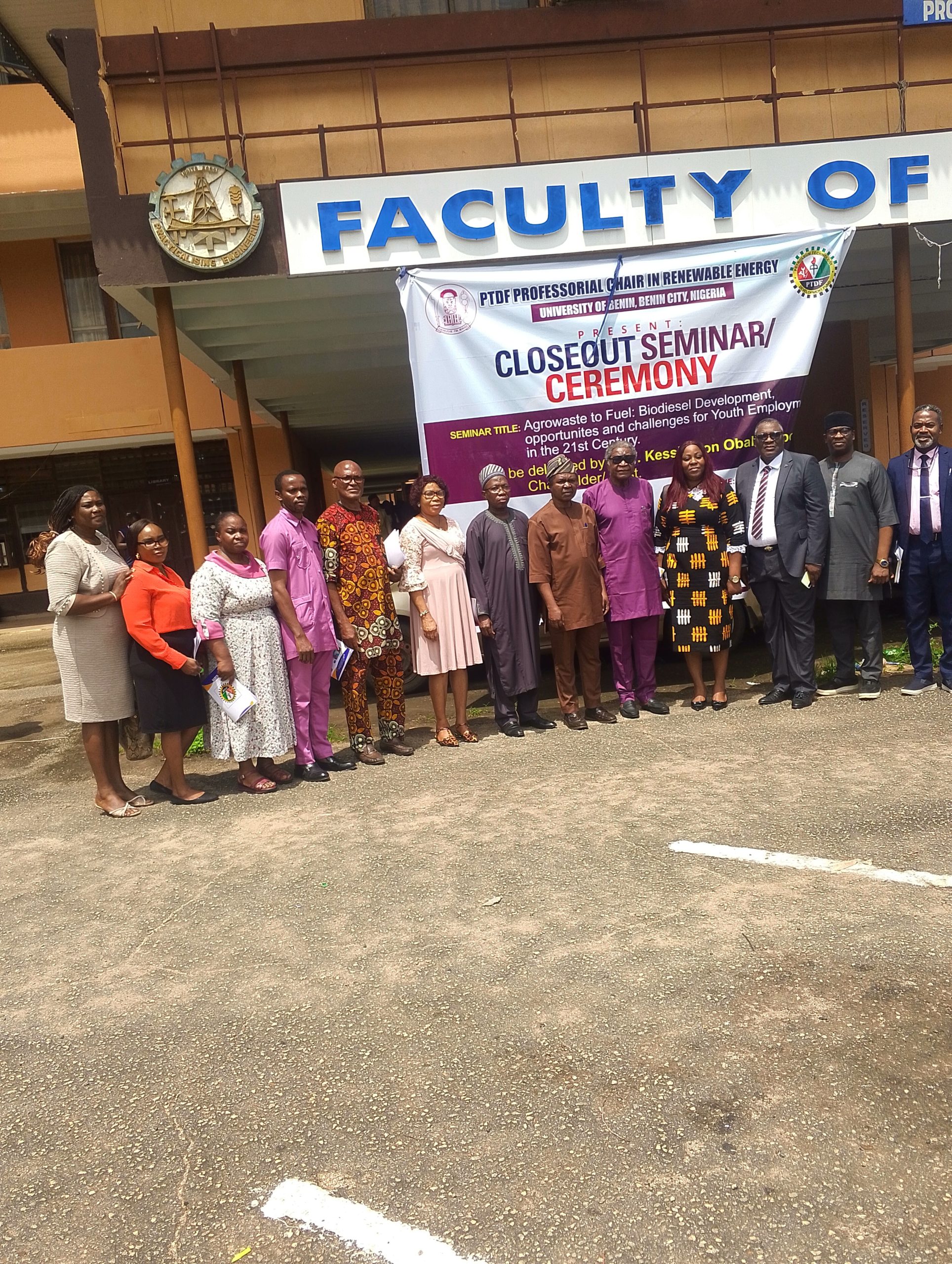
The call was made at the close-out worshop of the Petroleum Technology Development Fund (PTDF) Professional Chair in Renewable Energy at UNIBEN, themed “Agro- waste to Fuel: Biodiesel Development in Nigeria and Opportunities for Youth Employment in the 21st Century.”
The Vice-Chancellor, Prof. Edoba B. Omoregie, SAN, attended the workshop alongside other principal officers of the university.
In his remarks, Omoregie expressed appreciation to the PTDF for selecting UNIBEN as a beneficiary of the initiative, noting that the university’s Faculty of Engineering was known for excellence.
He described UNIBEN as a leading institution and emphasised the importance of renewable energy to national development, assuring the PTDF that the university would continue to value the partnership and maximise the opportunities it offers.
In a message delivered on behalf of the PTDF Executive Secretary, Prof. Shua’ib Shehu Aliyu, by Engr. Ere Iyalla, Head of the Gas Division, the Fund described the seminar’s theme as timely and relevant to Nigeria’s pursuit of sustainable energy, environmental protection, economic diversification and youth employment.
The message stated that the PTDF Professorial Chair Programme reflected the Fund’s commitment to strengthening research, innovation and human capital development in Nigerian universities.
It added that converting agricultural waste into biodiesel demonstrated how research and innovation could transform environmental and agricultural challenges into economic opportunities.
As the programme entered its close-out phase, the PTDF encouraged the university and its researchers to build on the achievements recorded and sustain the partnerships and innovations developed through the initiative.
Speaking on the theme, Prof. Kessington Obahiagbaon, Chair holder of the PTDF Chair in Renewable Energy at UNIBEN, outlined the opportunities, challenges and roadmap for biodiesel development in Nigeria.
He identified government support through tax incentives, subsidies and infrastructure investment as essential to advancing the sector. He also highlighted the importance of private-sector investment in bridging funding gaps and providing the technology and expertise required for large-scale production.
However, he identified inadequate infrastructure, including roads, storage facilities and refineries, as well as the need for a stable and sustainable supply of feedstock, such as vegetable oils and animal fats, as major challenges.
Obahiagbaon stressed that Nigeria’s biodiesel prospects depended not only on available technology and feedstock but also on effective organisation, investment and coordinated action.
He advocated a decentralised, circular and youth-driven energy model that would convert waste from homes and farms into fuel, with catalysts derived from agricultural materials such as shells.
According to the roadmap presented at the seminar, Nigeria could produce up to 1.5 billion litres of biodiesel annually by 2035, create 288,000 jobs, save $1.5 billion in foreign exchange and reduce carbon dioxide emissions by 3.75 million tonnes if the proposed measures were implemented.
The projections highlight biodiesel’s potential to create employment, reduce dependence on imported fuel and promote cleaner energy, provided the necessary investment, infrastructure and policy support are put in place.
The workshop concluded with a call for stronger collaboration among government, universities, researchers and private-sector investors to turn agricultural waste into a viable energy resource and expand employment opportunities for Nigerian youths.